

About the author
Dr. Anastacia Munro, MD, is the Medical Director of Parie Med Spa and a fellowship-trained anesthesiologist with more than 10 years of experience in patient care and procedural medicine. She oversees Parie’s clinical standards with a focus on patient safety and evidence-based care.
Professional profiles: Doximity · Healthgrades · Summerlin Hospital directory · NPI Registry
TLDR: Swap sugary drinks for water to reduce your calorie intake. The evidence in this guide does not show that IV hydration causes weight loss. Start with what you drink each day.
Drinking water supports weight loss when replacing sugary drinks reduces calorie intake, but the evidence in this guide does not show that IV hydration causes weight loss.
So, does drinking water help you lose weight? You want the plain truth, especially when a hot Summerlin day makes hydration a priority. Our team reviewed 16 primary sources for this guide, from NIH, CDC and FTC to published studies.
Does drinking water help you lose weight? What did trials find?
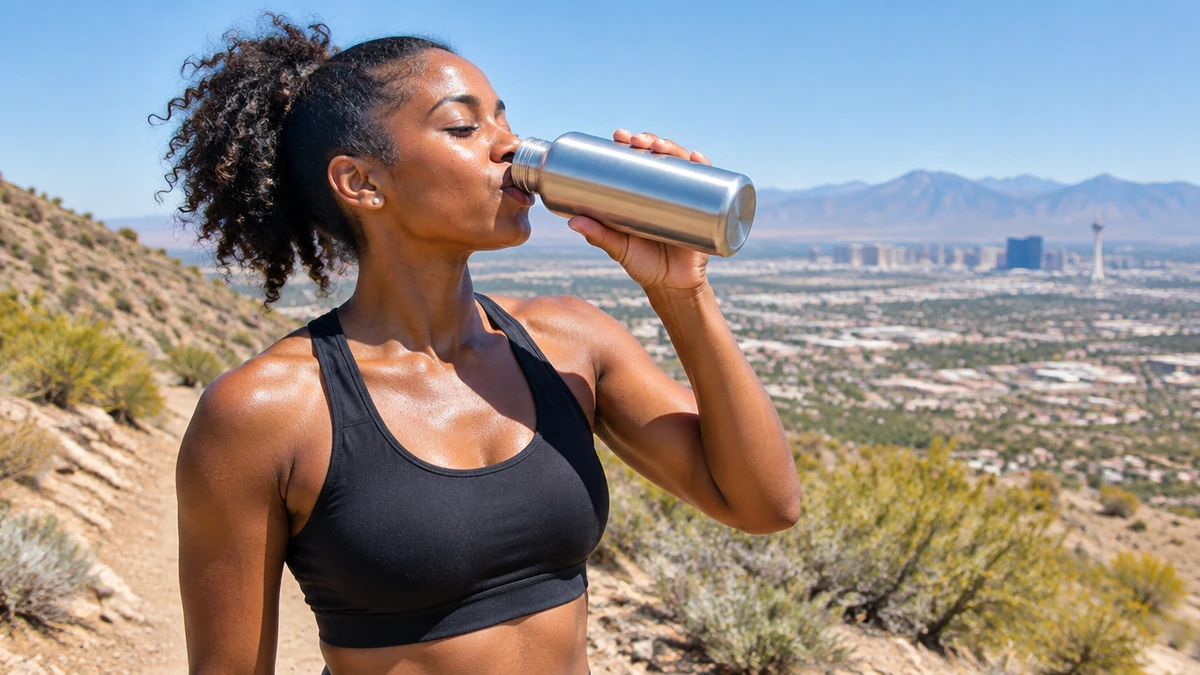
A study result needs context before you apply it to your day. In a 2010 drinking-water trial of 48 adults aged 55 to 75 over 12 weeks, both groups followed a lower-calorie diet, and those drinking 500 mL before each daily meal lost about 2 kg more than the diet-only group. When considering water consumption, look at the food plan as well as the amount in the glass.
A difference in averages is not a personal forecast. In the 2015 study of drinking water before meals, 84 adults with a high BMI were followed for 12 weeks, and drinking 500 mL before main meals favored the water group by about 1.2 kg after adjustment, but the difference was not statistically significant. For you, that means the number is too uncertain to use as an expected result.
Any broader view also needs its population limit. A 2024 review pooling eight drinking-water trials in people with a high BMI found no clear overall effect on weight-related measures, while suggesting a modest benefit when water replaced sugary drinks. If you are considering water for weight loss, the swap has a clearer rationale than adding another bottle to an unchanged routine.
Your first question about a hydration claim should be how the fluid was taken. Drinking water and receiving an IV are different routes, so do not assume a finding applies to both. Water and weight loss deserve a more specific explanation than the idea that extra fluid automatically changes your body weight.
Why does replacing sugary drinks matter?

Replacing a sugary drink with water removes that drink’s calories from your day. According to CDC guidance on water and drinks, plain water has no calories, so the swap reduces caloric intake. Adding a glass of water beside the same sugary drink does not remove those calories. The practical move is substitution.
Lunch, errands and evenings offer simple places to make that swap. If you usually choose a sugary drink with lunch, choose plain water in its place. During errands, bring water as your alternative to buying that usual drink. These are concrete beverage choices, with no need to attach a promised number of pounds to them.
Your food choices matter alongside fluid intake. CDC guidance on weight loss includes food patterns, regular physical activity, enough sleep and stress management. Consider your nutrition and dietary habits, with medical care when needed. Cleveland Clinic guidance says IV vitamins do not replace a healthy diet or undo habits related to food, exercise, sleep and stress.
How much water do you need in the Las Vegas heat?

Your body needs more water in hot weather and with greater physical activity. CDC guidance makes both points, so an active afternoon outside calls for more attention to fluids than an indoor day. In Las Vegas, plan for the heat before heading out to work or exercise. The immediate goal is hydration, without turning every drink into a weight strategy.
Daily reference amounts include more than the water you pour into a glass. The National Academies water reference lists 3.7 liters for men and 2.7 liters for women aged 19 to 30. Those 2005 values cover total water from all drinks and food and reflect typical intakes. They are reference values, not a personal drinking-water target or a volume linked to weight loss.
No single daily reference tells you how much water to drink to lose weight. The National Academies values describe total water intake based on typical intakes, not an individual drinking-water target for your hot-weather routine. A bottle count alone leaves out the water in meals and other beverages.
Strong thirst, dry mouth, dark-colored urine, tiredness and dizziness are signs to notice in yourself, according to MedlinePlus guidance on dehydration. Its advice includes extra fluids in hot weather, especially during outdoor work or exercise. Your practical checklist starts with those signs and the conditions around you.
- Notice strong thirst, dry mouth or dark-colored urine.
- Pay attention to tiredness or dizziness.
- Plan for extra fluids when you work or exercise outside in hot weather.
Does drinking water help you lose weight, and where do IVs fit?
IV hydration delivers fluid, but the evidence in this guide does not show that it causes weight loss. IV fluids enter a vein, while IV vitamins bypass your digestive system. According to Cleveland Clinic guidance on IV vitamins, expert advice rather than a trial, scientific support for a direct general benefit in healthy people remains limited. A different delivery route does not turn drinking-water findings into drip results.
Drinking water and IV hydration supply fluid in different ways. The useful comparison for you is what each route delivers and what was measured. Cleveland Clinic’s general IV-fluid guidance describes replacing fluids in medical care and says nothing about vitamins added to a drip.
| Option | What it means for you |
|---|---|
| Water instead of sugary drinks | No calories in plain water, so the swap reduces calories from drinks. |
| Water before meals | In a 2010 drinking-water trial of 48 adults aged 55 to 75 over 12 weeks, both groups followed a lower-calorie diet, and drinking 500 mL before each daily meal added about 2 kg of weight loss versus diet alone. |
| IV hydration | Medical-care guidance describes fluid delivered into a vein to replenish fluids, without assessing vitamins added to a drip. The evidence in this guide does not show an IV weight benefit. |
For your wider routine, the guide to IV drips and weight study limits puts those limits alongside food, activity, sleep and stress management. Cleveland Clinic guidance says IV vitamins do not replace a healthy diet or undo habits related to nutrition, exercise, sleep and stress management. When thinking about hydration and weight loss, keep your beverage choices within that wider routine.
How should you judge a weight claim?

A credible weight claim needs more than a scientific-sounding explanation. The FTC guide to weight claims says meaningful weight loss requires taking in fewer calories than you use. Its 2014 advertising guidance also identifies substantial weight promises without diet or exercise as false. You should expect a claim about an IV to rest on findings about that IV.
Straight talk means keeping the result attached to the test. When you see a number in an advertisement, check for the food plan, the drinking route and the study limit beside it. Look for the participants’ ages and BMI, the length of the trial and whether the difference was statistically significant. Those details belong beside the result, where you are able to assess them.
What does The Drip Room offer for your hydration routine in Summerlin?
The Drip Room is an IV lounge at 1725 Village Center Cir #110, Las Vegas, NV 89134, in Summerlin, and a sister brand of Parie Med Spa. Its ten signature drips are formulated by medical professionals and delivered by licensed providers. Your options also include NAD+ IVs and booster shots.
If hydration is your focus, the Hydr8 ingredient list names Mineral Blend and B Complex. The Mineral Blend’s contents are not published, so ask your provider what’s in it. Tell your provider about your heart or kidney health, any pregnancy and every medicine you take.
The lounge is open Monday to Sunday, 9 AM to 7 PM. You have the option to call (725) 248-1113. Booking is available through the contact page and each drip’s page.
Water and Weight Loss FAQ
How much water should I drink to lose weight?
There is no single personal water target for weight loss in these trials. The 2010 drinking-water trial followed 48 adults aged 55 to 75 for 12 weeks, with both groups on a lower-calorie diet and one group drinking 500 mL before each daily meal. The 2015 trial followed 84 adults with a high BMI for 12 weeks and tested drinking 500 mL before main meals, with an adjusted weight difference that was not statistically significant. For you, those volumes describe what researchers tested, not an amount to copy.
Does drinking water before meals help you eat less?
It is uncertain whether you will eat less. In the 2010 drinking-water trial of 48 adults aged 55 to 75 over 12 weeks, with both groups on a lower-calorie diet, test-meal intake after drinking 500 mL of water was lower at the start, 498 versus 541 calories, but the gap was no longer statistically significant at week 12. Read that as a limited finding, not a promise for your meals.
Does IV hydration help you lose weight?
The evidence in this guide does not show an IV weight benefit for you. A small 2000 lab study of eight trained cyclists comparing salt water by mouth or IV after dehydration in the heat, without vitamins, found no statistically significant difference in time to exhaustion. A 2026 crossover lab study in recreationally active men cycling in the heat, with oral water or IV saline during exercise and no vitamins, found faster time trials with oral water and no difference in hydration status afterward.
What are signs I’m not drinking enough water?
Strong thirst, dry mouth, dark-colored urine, tiredness and dizziness are signs for you to notice. MedlinePlus adds that confusion, fainting or lack of urination alongside dehydration symptoms call for medical help right away. If that describes you, seek urgent medical care rather than scheduling a lounge visit.
Do other drinks count toward my water intake?
Yes, your total water includes all drinks and food. In the National Academies reference, food supplied 19 percent of total water intake. That figure describes the reference data, not a required share for your meals.
Who should avoid IV vitamin therapy?
You should avoid IV vitamin therapy if you are receiving care for heart disease, high blood pressure, kidney disease or pregnancy, according to Cleveland Clinic. Its guidance also lists bruising at the needle site and negative medication interactions as possible risks, without giving rates. Tell your provider about those circumstances and every medicine you take.
Want the ingredient details for your hydration routine? Read about the Hydr8 drip at The Drip Room in Summerlin. New clients pay $99 for any signature drip, one per guest. You have the option to see the new client special or book your drip at the lounge.
Like this article? Add The Drip Room as a preferred source, and you are more likely to see our articles in Google’s Top Stories.